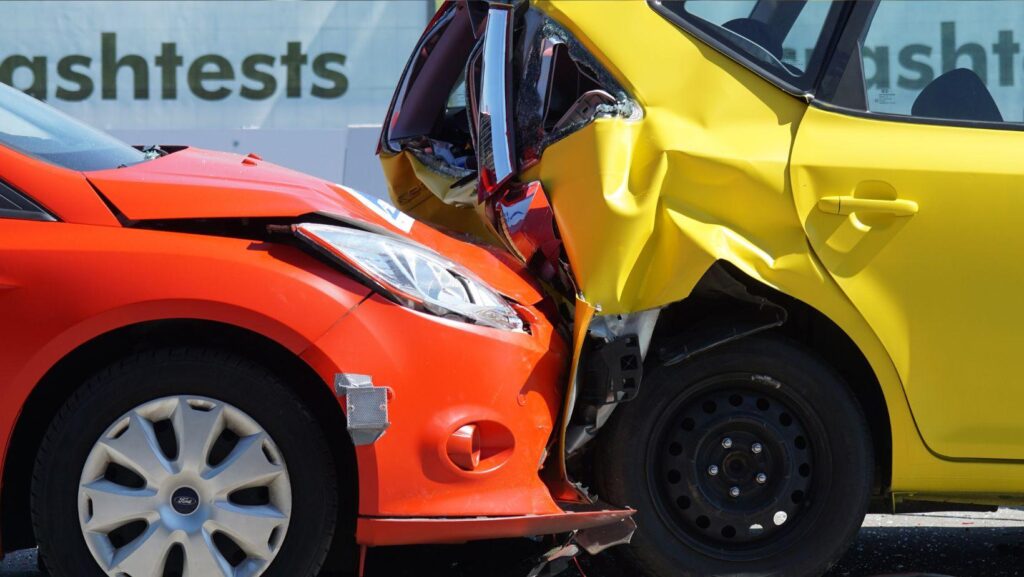
Want to know what actually happens inside a car during a crash?
You never think about it until you’re involved in a crash. But beneath every vehicle sits a pile of crash test data that determines how safe you are … and how your injury claim unfolds.
Here’s the thing:
These tests do not simply end up on a shelf. They appear in courtrooms and insurance reports and injury claims daily.
Let’s break it all down.
Here’s the rundown:
- What Is Crash Test Technology?
- How Crash Test Dummies Collect Data
- How Crash Ratings Affect Your Injury Claim
- Why This Matters After An Accident
What Is Crash Test Technology?
Crash test engineering involves deliberately colliding automobiles with fixed objects to study the effects of the collision on occupants.
Easy enough, huh? Except that there’s a lot going on here. Primarily two organizations have performed these tests: Insurance Institute for Highway Safety and the National Highway Traffic Safety Administration (NHTSA). Both conduct strict testing procedures replicating realistic accidents.
The IIHS runs five primary crashworthiness tests:
- Small overlap front test – 40% of the front end collides with a barrier at 40 mph
- Moderate overlap front test — a wider frontal impact, also at 40 mph
- Side-impact test — occupant protection when hit at 31 mph
- Roof strength test — a metal plate presses down to check rollover protection
- Head restraint test — measures whiplash protection in rear-end crashes
It’s working. IIHS statistics show vehicle advancements prevented an estimated 48,352 deaths from 1999 to 2024. Crash test data saving lives.
If you’ve been injured in a collision, you should know that this technology can be more important than you realize. An expert Minneapolis car accident attorney will frequently rely on crash test data to demonstrate how a crash caused your injuries. Most offer a free accident consultation, but you’ll be in a far better position from the start if you know how crash tests work.
Pretty important stuff, right?
How Crash Test Dummies Collect Data
Now for the cool part… the dummies.
Crash test dummies look like plastic mannequins but they are loaded with electronics that record events that happen in thousandths of a second. These sensors measure forces, motion and impact throughout the body.
How much data are we talking?
Thousands. Crash test dummies used today in the twenty-first century are equipped with over 200 sensors. These sensors allow the engineer to anticipate human injury much more precisely. They are located in strategic places to measure various types of damage.
Here’s what they measure:
- Head sensors track accelerations that could cause concussions
- Neck sensors monitor loads that lead to whiplash
- Chest sensors measure compression and rib deflection
- Pelvic and spine sensors capture forces in side and rear impacts
Every sensor has a story to tell. Engineers combine all of these measurements to see the complete story of what an actual human body would have experienced during that specific crash.
Think about it:
A large force measurement at a dummy’s neck sensor in a rear impact test means a person would sustain whiplash injuries. Injury criteria is information like this.
Technology is improving as well. Newer dummies are shaped differently to simulate different types of people, not just the average adult.
How Crash Ratings Affect Your Injury Claim
This is where crash test technology gets personal.
If you file an injury claim for your car accident, you can be sure that the other side will fight you. Insurance companies love to claim that your injuries “could not have occurred” in your type of collision. Crash test data can help debunk that argument quickly.
Here’s how it works:
Crash tests establish scientifically verifiable cause and effect between particular collisions and resulting injuries. If a crash test dummy is run through a controlled 40 mph crash and sustains a particular injury, that is proof. If you were involved in an accident that meets those parameters, you now have data that supports your claim.
Real-world results agree with these ratings as well. Drivers of cars that earn a good rating are 46% less likely to be killed in a frontal crash than those driving vehicles that earn a poor rating. Those types of numbers matter.
So how does this help your claim? A few ways:
- It proves your injuries are consistent with the crash forces
- It shows whether your vehicle’s safety features worked as intended
- It helps calculate the severity of the impact you survived
Okay. You got hit in the rear and now you hurt your neck. The insurance company says you can’t be hurt by a “minor bump.” But what about the data from crash test sensors measuring forces of whiplash? Now you’ve got science backing your claim.
BIG difference. You’re not just taking your word for it. You have hard evidence that cost engineers millions of dollars to compile.
Why This Matters After An Accident
You might be wondering… why should you care about all this technical stuff?
Why? Because crash testing evens the playing field. Insurance companies have teams of people working against you. Crash data arms you and your attorney with hard evidence to fight back with.
Consider this:
All crash test data is publicly available. This means your attorney can access the precise safety rating for your vehicle, compare it to your actual crash and create an undeniable case.
There’s billions of dollars at stake. The IIHS crash testing program saved society an estimated $538 billion through its safety improvements. Just how seriously safety organizations take that data, and why they fight tooth and nail over crash test claims.
Here’s the bottom line:
Were you injured? Don’t take what the insurance company says happened to you as truth. The crash test technology embedded in your vehicle may be able to tell.
Bringing It All Together
Crash testing is much more than crash test dummies colliding with objects. It secures vehicle occupants before a crash occurs and provides survivability for crash victims. Let’s review quickly:
Crash tests have two main organizations that rate vehicle safety, the IIHS and NHTSA
- Crash test dummies carry hundreds of sensors that predict real human injuries
- This data creates a proven link between crash forces and injuries
- That link can strengthen your injury claim in a big way
What most accident victims don’t realize is how much this information can help them. You now realize. When science is in your corner, you are far better positioned to achieve the results you deserve.
Get hurt in a crash? Choose the correct legal representation with quality crash testing data on your side.