For decades, car culture revolved around horsepower, mechanical knowledge, and brand loyalty. Enthusiast communities were often defined by engine modifications, track days, and traditional ideas of performance. Younger drivers, however, are gradually changing those priorities.
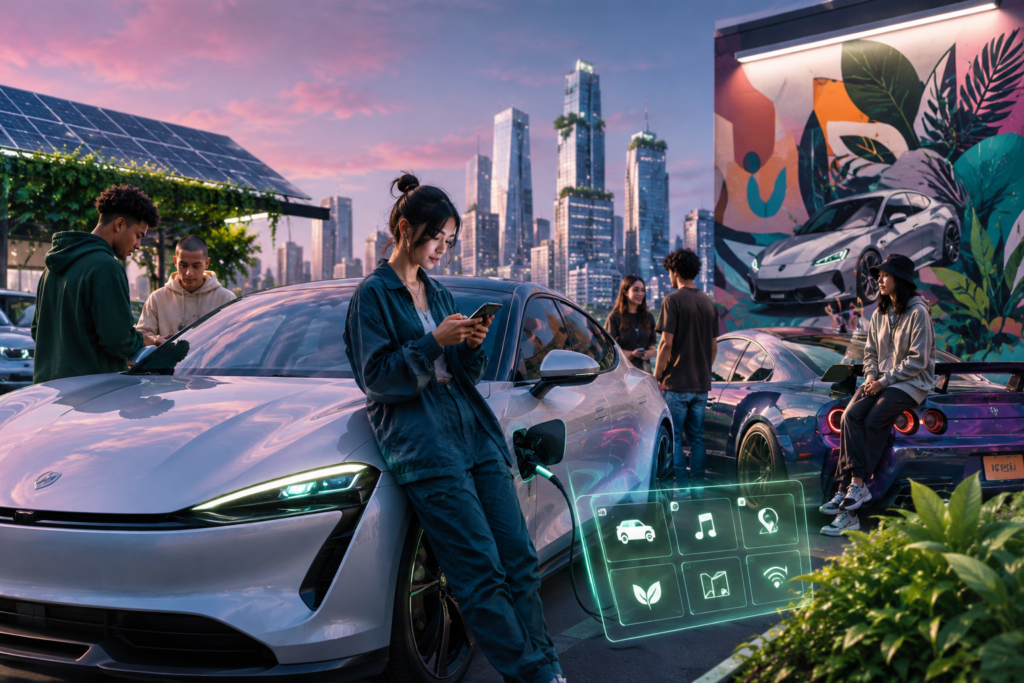
Generation Z has entered the automotive world with a very different relationship to vehicles — one shaped by digital connectivity, environmental awareness, aesthetics, and online identity. While passion for cars remains strong, the meaning of ownership is evolving. The result is a new era of car culture that blends technology, design, sustainability, and self-expression in ways previous generations rarely considered.
Cars as Extensions of Digital Identity
For many younger motorists, a car is no longer just a mode of transport. It is part of a wider personal brand. Platforms such as TikTok, Instagram, and YouTube have transformed how vehicles are showcased and discussed, pushing visual identity to the forefront of automotive culture.
This shift has influenced everything from colour choices to lighting setups and interior styling. Clean aesthetics, unique details, and carefully curated modifications often attract as much attention online as traditional performance upgrades. The popularity of minimalist wraps, ambient lighting, custom dashboards, and carefully photographed interiors reflects how strongly visual culture now influences automotive trends.
Unlike earlier generations that often focused heavily on mechanical expertise, younger enthusiasts are just as interested in how a vehicle fits into a digital lifestyle. A car’s appearance in photos and videos can matter as much as its performance figures.
This has also contributed to rising interest in subtle personalisation. For drivers wanting a more individual look, companies like Plates Express have seen growing interest from motorists who view registration details as another element of vehicle identity rather than simply a legal requirement.
Sustainability Is Influencing Enthusiast Culture
Environmental concerns are also reshaping how younger people engage with cars. Previous generations often associated enthusiast culture with large engines and fuel consumption, but younger drivers are more likely to balance passion with sustainability.
Electric vehicles have played a major role in that transition. What was once considered a niche market has become increasingly mainstream among younger consumers, particularly in urban areas where charging infrastructure continues to improve.
Importantly, EV ownership is beginning to develop its own enthusiast communities. Drivers now discuss software updates, charging strategies, interface customisation, and energy efficiency with the same enthusiasm once reserved for exhaust systems and engine tuning.
This changing mindset has broadened the definition of what makes a car interesting. Innovation, usability, and environmental impact are now part of the conversation alongside acceleration and design.
Even among drivers who still favour petrol-powered vehicles, there is growing interest in sustainability through restoration culture, long-term ownership, and preserving older vehicles rather than constantly replacing them. In many ways, younger motorists are redefining enthusiasm around responsibility as much as excitement.
Connectivity Has Become a Core Expectation
Younger drivers have grown up in an always-connected environment, and their expectations for vehicles reflect that reality. Modern motorists increasingly view connectivity as essential rather than optional.
Features such as wireless smartphone integration, live navigation, over-the-air software updates, and app-controlled vehicle functions have become major purchasing considerations. Cars are expected to operate as part of a connected digital ecosystem rather than as standalone machines.
This has influenced buying habits across both new and used markets. Vehicles with outdated infotainment systems or limited connectivity can quickly feel obsolete to younger buyers, regardless of their mechanical quality.
The shift is also affecting the broader automotive industry. Manufacturers now compete heavily on user experience, interface design, and digital services. Software has become a central part of vehicle development, fundamentally changing how brands approach innovation.
In many respects, younger drivers evaluate cars in a similar way to consumer technology. Ease of use, seamless integration, and digital convenience increasingly influence perceptions of quality.
Online Communities Are Replacing Traditional Gatekeeping
Car culture was once heavily dependent on local meets, specialist clubs, and regional communities. While those spaces still exist, online platforms have made automotive culture significantly more accessible.
Younger enthusiasts can now learn modification techniques, compare builds, and discover niche communities without needing physical access to established groups. This has reduced some of the traditional gatekeeping associated with enthusiast scenes.
It has also encouraged more diverse forms of participation. Some drivers focus on photography, others on restoration, design, detailing, software tuning, or travel-based content. The modern automotive community is far less rigid in how enthusiasm is expressed.
This accessibility has helped niche trends spread rapidly across global audiences. Styling trends, aftermarket products, and vehicle aesthetics now move quickly through online communities, often influencing mainstream tastes within months.
The result is a car culture that feels more fluid and visually driven than in previous decades.
Ownership Priorities Are Changing
Younger motorists are also approaching ownership differently. Rising living costs, urbanisation, and changing attitudes toward mobility mean many people no longer see cars purely as status symbols.
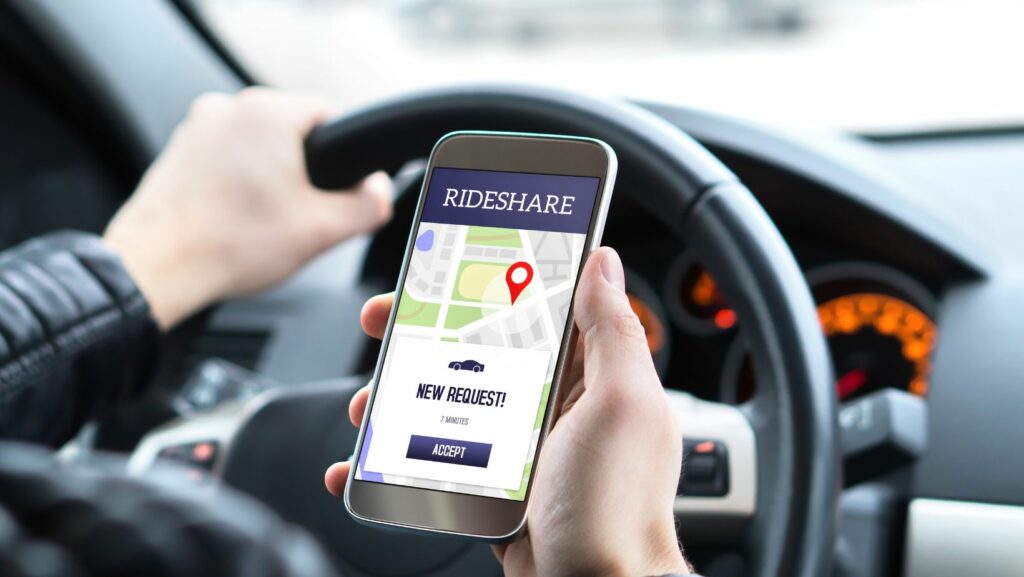
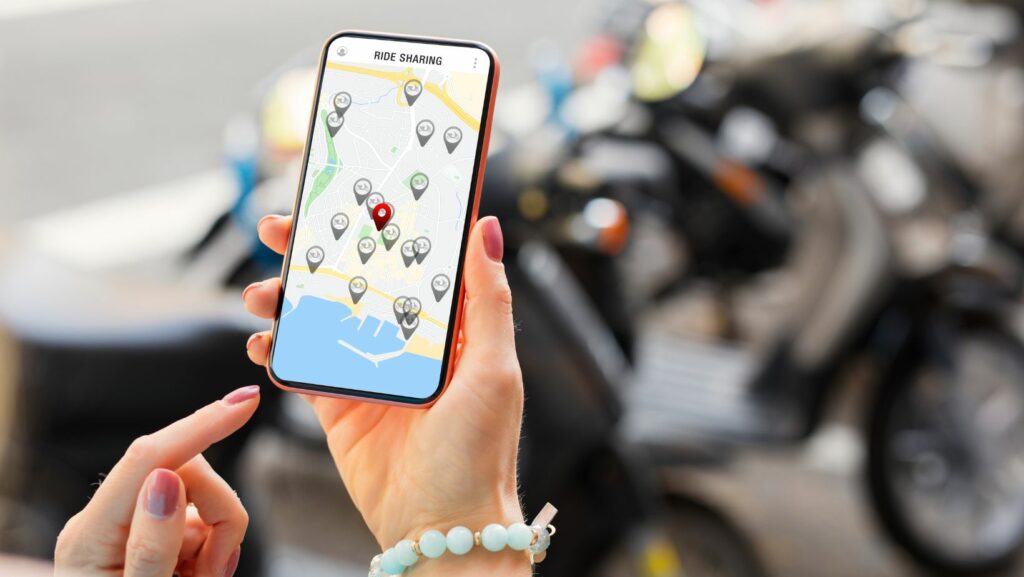
Practicality, flexibility, and long-term value increasingly shape purchasing decisions. Subscription services, finance models, and shared mobility options have changed how younger consumers think about access to vehicles.
At the same time, emotional connection still matters. Drivers continue to personalise and invest in their vehicles, but often with a focus on usability and lifestyle compatibility rather than outright performance.
This explains the growing popularity of compact SUVs, hybrid models, camper conversions, and technology-focused vehicles. These choices reflect how modern motorists balance identity, practicality, and experience.
A Different Kind of Enthusiast Era
Car culture is not disappearing — it is evolving. Younger drivers still care deeply about vehicles, but their priorities differ from those of previous generations.
Sustainability, digital integration, aesthetics, and personal identity now play a central role in how people engage with cars. Enthusiasm has expanded beyond mechanical performance into design, technology, connectivity, and online expression.
That shift is already influencing manufacturers, aftermarket businesses, and enthusiast communities across the automotive industry. As younger drivers gain greater purchasing power, their preferences will continue shaping the future of mobility and automotive culture itself.
The next era of car enthusiasm may look very different from the past, but it remains driven by the same underlying idea: people want vehicles that reflect who they are and how they live.